Optogenetics: Illuminating the Path toward Causal Neuroscience

2019 Warren Alpert Foundation Prize Symposium

In honor of Edward Boyden, Karl Deisseroth, Peter Hegemann, Gero Miesenböck for the development of optogenetics as a way to control the activity of specific circuits in the nervous system, to determine their function and ultimately to control them to treat neurological and psychiatric disorders.

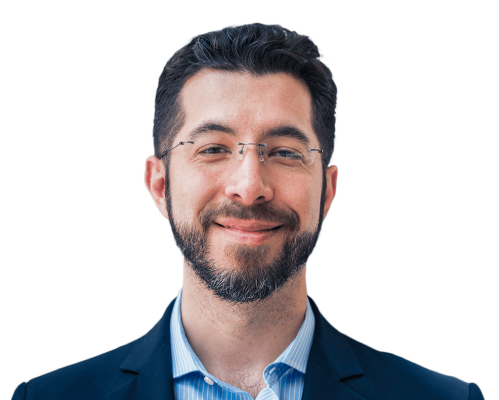
Edward Boyden

Edward Boyden | 2019 Recipient

Edward Boyden is the Y. Eva Tan Professor of Neurotechnology, Professor of Biological Engineering and Brain and Cognitive Sciences at MIT’s Media Lab and McGovern Institute for Brain Research, and Co-Director of the MIT Center for Neurobiological Engineering. In 2018, he was selected to be an Investigator of the Howard Hughes Medical Institute.  While a PhD student at Stanford, he discovered that the molecular mechanisms used to store a memory are determined by the content to be learned. In parallel, he co-invented optogenetic control of neurons. In particular, he and co-winner Karl Deisseroth brainstormed about how microbial opsins could be used to mediate optical control of neural activity while both were students. Together, the two of them collaborated to demonstrate the firstoptical control of neural activity using microbial opsins, with Karl, then a postdoc, and Ed, then a graduate student, performing the gene transfection and the optical stimulation respectively.

His lab at MIT pioneered optogenetic neural silencing using microbial opsins, and further developed the optogenetic toolset towards the neuroscience-driven goals of powerful, noninvasive, high-speed, multiplexed, and single-cell targeted optical control of neural activity. Dr. Boyden has received the Grete Lundbeck Brain Prize (2013), the Jacob Heskel Gabbay Award (2013), the Carnegie Prize in Mind and Brain Sciences (2015), the BBVA Foundation Frontiers of Knowledge Award (2015), the Breakthrough Prize in Life Sciences (2016), and the Canada Gairdner International Award (2018).  He is an elected member of the National Academy of Sciences, the American Academy of Arts and Sciences, and the National Academy of Inventors.

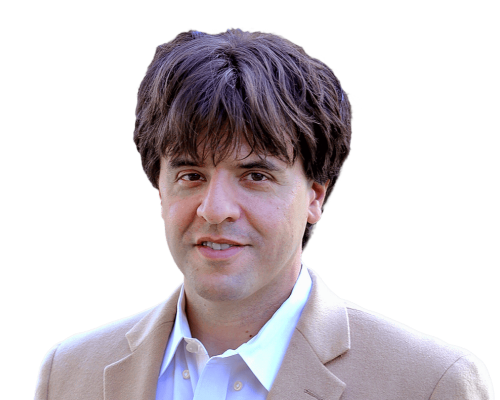
Karl Deisseroth

Karl Deisseroth | 2019 Recipient

Deisseroth received his AB from Harvard, MD from Stanford, and PhD from Stanford in 1998. He launched his laboratory spanning the Departments of Bioengineering and Psychiatry at Stanford in July 2004, where he and his students created and developed both optogenetics with microbial opsin genes (a technology to control specific neurons with light), and hydrogel-tissue chemistry (which includes CLARITY, STARmap, and many variants—all allowing the transformation of tissues into optically transparent and tractable hydrogel-hybrid forms suitable for high-resolution structural and molecular study). He was elected to the National Academy of Medicine in 2010, National Academy of Sciences in 2012, and National Academy of Engineering in 2019.Twenty-three alumni from his lab have moved on to tenure-track faculty positions (including Feng Zhang and Ed Boyden, the two students on his initial optogenetics paper).

Deisseroth was the sole recipient (for optogenetics) of the 2010 Koetser Prize, 2010 Nakasone Prize, 2013 Lounsbery Prize, 2014 Dickson Prize in Science, 2015 Keio Prize, 2015 Lurie Prize, 2015 Albany Prize, 2015 Dickson Prize in Medicine, 2017 Redelsheimer Prize, 2017 Fresenius Prize, 2018 Eisenberg Prize, and 2018 Kyoto Prize. For his discoveries, Deisseroth has also received the NIH Director’s Pioneer Award (2005), Zuelch Prize (2012), Perl Prize (2012), BRAIN Prize (2013), Pasarow Prize (2013), Breakthrough Prize (2015), Gabbay Prize (2015), BBVA Award (2016), Massry Prize (2016) and Harvey Prize from the Technion in Israel (2017).

Peter Hegemann

Peter Hegemann | 2019 Recipient

Peter Hegemann is a Hertie professor for neuroscience and head of Experimental Biophysics at Humboldt-Universitaet zu Berlin. Hegemanns research focused almost entirely on the characterization of natural sensory photoreceptors. Hegemann has characterized behavioral and photoelectric responses of the unicellular alga Chlamydomonas, a work that cumulated in the claim that the photoreceptors for these responses a rhodopsins that unify the sensor and ion channel in one protein. He has finally proven this concept by identifying the light gated channel channelrhodopsin, and its functionality in animal cells.

His group characterized this protein in molecular detail by a wide range of biophysical techniques; in close collaboration with Karl Deisseroth this lead to the deciphering of the ion channel mechanism, including gating and ion selection. This work was the basis for the discovery of Optogenetics, a technology where light activated proteins – first of all channelrhodopsin - allow to control selected cells of large networks as the animal brain with unprecedented precision in space and time just by application of light. The Hegemann group also works on light-activated enzymes which further expand the optogenetic applications to important biochemical pathways.

Gero Miesenböck

Gero Miesenböck | 2019 Recipient

Gero Miesenböck is Waynflete Professor of Physiology and founding Director of the Centre for Neural Circuits and Behaviour at the University of Oxford. Before coming to Oxford in 2007, he held faculty appointments at Memorial Sloan-Kettering Cancer Center and Yale University. Miesenböck was the first scientist to modify neurons genetically so that their electrical activity could be controlled with light. This involved inserting DNA for light-responsive opsin proteins into the cells. He used similar genetic modifications to breed animals whose brains contained light-responsive neurons integrated into their circuitry and was the first to demonstrate that the behavior of these animals could be remote-controlled. Miesenböck has received many awards for the invention of optogenetics, including the InBev-Baillet Latour International Health Prize, the Brain Prize, the Heinrich Wieland Prize, the BBVA Foundation Frontiers of Knowledge Award, and the Massry Prize. He is a member of the Austrian and German Academies of Sciences and a Fellow of the Royal Society.

Symposium Program

Each year the recipient(s) of the Warren Alpert Foundation Prize are recognized at a scientific symposium hosted by Harvard Medical School.

Featured Speakers include:

Edward Boyden, PhD

Y. Eva Tan Professor in Neurotechnology MIT Media Lab and McGovern Institute Investigator, Howard Hughes Medical Institute

Karl Deisseroth, MD, PhD

D.H. Chen Professor of Bioengineering and Psychiatry Stanford University Investigator, Howard Hughes Medical Institute

Peter Hegemann, PhD

Hertie Professor for Neuroscience and Head of Experimental Biophysics Humboldt-Universität zu Berlin

Gero Miesenböck, FRS

Waynflete Professor of Physiology and Founding Director of the Centre for Neural Circuits and Behaviour University of Oxford

Invited Speakers Include:

Charlotte Arlt, PhD

Postdoctoral Research Fellow, Department of Neurobiology Harvard Medical School

Kimberly Reinhold, PhD

Postdoctoral Research Fellow, Department of Neurobiology Harvard Medical School

Sign up to receive updates

Sign up to receive updates

Past Symposia

For questions about the prize, please contact us.

Contact Us
I am thankful to the Warren Alpert Foundation and to the prize selection committee for their consideration, and I look forward to further serving the CRISPR community.
- Rodolphe Barrangou

Rodolphe Barrangou | 2016 Recipient

Rodolphe Barrangou is an Associate Professor in the Department of Food, Bioprocessing and Nutrition Sciences at North Carolina State University, a NC State University Scholar, and the Todd R. Klaenhammer Distinguished Scholar in Probiotics Research. Dr. Barrangou is also an associate member of the Microbiology graduate program, the Biotechnology graduate program, the Functional Genomics graduate program, and the Center for Integrative Medicine. Dr. Barrangou is also an adjunct member of the Food Science Department at the Pennsylvania State University.

His CRISPR laboratory focuses on the evolution and functions of CRISPR-Cas systems, and their use for bacterial genotyping, building prokaryotic immunity, and Cas9-mediated genome editing in lactic acid bacteria used in food manufacturing.

Dr. Barrangou earned a BS in Biological Sciences from the Rene Descartes University in Paris, France; a MS in Biological Engineering from the University of Technology in Compiegne, France; a MS in Food Science from NC State University; a PhD in Genomics from NC State University; and a MBA from the University of Wisconsin-Madison. Dr. Barrangou and colleagues at DuPont established the biological role of CRISPR-Cas systems in adaptive immunity in bacteria, and used CRISPR-based technologies for bacterial genotyping of industrial cultures, and for the vaccination of dairy cultures against bacteriophages. After nine years in R&D and M&A at Danisco and DuPont, he joined the faculty at NC State University in 2013.

Dr. Barrangou is the recipient of the 2014 NC State Alumni Association Outstanding Research Award, and of the 2015 NC State Faculty Scholars Award. He has been on the Thomson Reuters Highly Cited Researchers list in 2014 and 2015. Dr. Barrangou is on the board of directors of Caribou Biosciences, a co-founder and member of the Scientific Advisory Board of Intellia Therapeutics, and a founding investor of Locus Biosciences.

Dr. Barrangou has published numerous articles on CRISPR-Cas systems and their use since 2005, including establishing their role as bacterial immune systems, and exploiting them for industrial applications. Following the initial work unraveling the biological function of CRISPR arrays and cas genes, subsequent studies and collaborative efforts identified PAMs as critical sequences for phage DNA targeting, showed that Cas9 is an endonuclease which can cleave plasmid and phage DNA, and provided the first proof of concept that CRISPR can be reprogrammed and transferred heterologously. Dr. Barrangou also established and co-hosted five international CRISPR meetings, and edited the first book on CRISPR-Cas systems.

View Past Recipients