
Human Genetics and Disease Discovery

In honor of David Botstein, PhD, Ronald W. Davis PhD, and David S. Hogness, PhD for their seminal contributions to the concepts and methods of creating a genetic map in the human, and of positional cloning, leading to the identification of thousands of human disease genes and ushering in the era of human genetics.
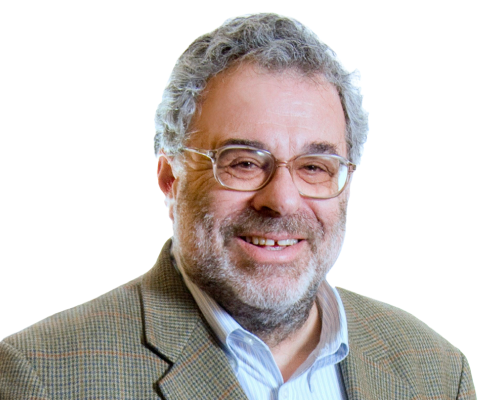
David Botstein

David Botstein | 2013 Recipient

For their seminal contributions to concepts and methods of creating a genetic map in the human, and of positional cloning, leading to the identification of thousands of human disease genes and ushering in the era of human genetics.

David Botstein, AB ’63, PhD, is the Anthony B. Evnin Professor of Genomics at the Lewis-Sigler Institute for Integrative Genomics at Princeton University. His landmark conceptual breakthrough, published in 1980 together with other collaborators, suggested a way to map human disease genes with DNA polymorphisms, called restriction fragment length polymorphisms. This became a cornerstone of the new science of genomics, which he furthered by co-founding the Saccharomyces Genome Database (with J. Michael Cherry), and applying DNA microarray technology (with Patrick O. Brown) to study genome-wide gene expression, and leveraging this to define subtypes of human tumors.

Dr. Botstein contributed to the discovery of transposons in bacteria and helped uncover their physical and genetic properties. He devised genetic methods to study the eukaryotic cytoskeleton in yeast (Saccharomyces cerevisiae). At Princeton, Botstein is leading a team of faculty teaching a new introductory science curriculum that combines biology, physics, chemistry, and computer science. He taught at MIT from 1967 to 1987, was vice president at Genentech from 1987 to 1990, served as chairman of genetics at Stanford from 1990 to 2003, and then served as Director of the Lewis-Sigler Institute at Princeton from 2003 to 2013. He was elected to the National Academy of Sciences in 1981 and the Institute of Medicine in 1993.

Opening Remarks

Jeffrey S. Flier, MD

Dean of the Faculty of Medicine, Harvard University

Moderated by

Stephen Elledge, PhD

Gregor Mendel Professor of Genetics and Medicine, Harvard Medical School and Brigham and Women’s Hospital; Investigator, Howard Hughes Medical Institute

Fred Winston, PhD

John Emory Andrus Professor of Genetics, Harvard Medical School

Remarks and Reflections

Ronald W. Davis, PhD

Professor of Biochemistry and Genetics; Director, Stanford Genome; Technology Center, Stanford University School of Medicine

David Botstein, PhD

Anthony B. Evnin Professor of Genomics, Princeton University

Invited Speakers

Steven McCarroll, PhD

Assistant Professor, Department of Genetics, Harvard Medical School; Director of Genetics, Stanley Center for Psychiatric Research, The Broad Institute of MIT and Harvard

Where Is the Rest of the Human Genome?

David Altshuler, MD, PhD

Professor of Genetics and of Medicine, Harvard Medical School and Massachusetts General Hospital; Deputy Director and Chief Academic Officer, The Broad Institute of MIT and Harvard

Human Genetic Variation and Common Disease

Richard P. Lifton, MD, PhD

Sterling Professor and Chair, Department of Genetics; Professor of Genetics, Internal Medicine & Molecular Biophysics & Biochemistry, Yale University School of Medicine; Investigator, Howard Hughes Medical Institute

Rare Variants, Therapeutic Targets, and the Future of Medicine

Sign up to receive updates

Sign up to receive updates

Past Symposia

For questions about the prize, please contact us.

Contact Us
I am deeply honored to be recognized with Lap-Chee Tsui, Francis Collins, Bonnie Ramsey, and Paul Negulescu. In accepting this award, I acknowledge so many other people who contributed: talented students and trainees, my tireless and innovative assistants, my cherished colleagues and my collaborator, Alan Smith and his team at Genzyme. I thank the University of Iowa, the Howard Hughes Medical Institute, the National Institutes of Health, and the Cystic Fibrosis Foundation for their support. Most of all, I thank my family, whose love and support made everything possible.
- Michael Welsh

Michael Welsh | 2018 Recipient

Dr. Welsh received an MD and completed an internal medicine residency at the University of Iowa.  He trained in pulmonary medicine and research at the University of California, San Francisco and the University of Texas, Houston.  He then joined the University of Iowa as an Assistant Professor, where his clinical activies focused on pulmonary diseases.  He is currently the Roy J. Carver Professor of Internal Medicine and Molecular Physiology and Biophysics.  He directs the Pappajohn Biomedical Institute and the Cystic Fibrosis Research Center.  He is an Investigator of the Howard Hughes Medical Institute.

Dr. Welsh served as President of the American Society for Clinical Investigation and as President of the Association of American Physicians.  He has been elected to the National Academy of Medicine, the American Academy of Arts and Sciences, and the National Academy of Sciences.

He has received many awards including the Carver College of Medicine Distinguished Mentor Award, the Cystic Fibrosis Foundation Paul di Sant'Agnese Distinguished Scientific Achievement Award, the American Thoracic Society J. Burns Amberson Award, the Doris F. Tulcin Cystic Fibrosis Research Award, the American Physiological Society Walter B. Cannon Award, and the Indiana University Steven C. Beering Award.

View Past Recipients