2026 Warren Alpert Foundation Prize Announced
2026 Warren Alpert Foundation Prize Awarded for Gene-Editing Therapies
Five scientists recognized for contributions to cures for sickle cell disease and beta-thalassemia
By LAURA CASTAÑÓN
The 2026 Warren Alpert Foundation Prize has been awarded to five scientists for their work leading to curative genetic therapies for two major blood disorders: sickle cell disease and beta-thalassemia. These diseases affect millions of people around the world.
The awardees are:
- Swee Lay Thein, senior investigator and chief of the Sickle Cell Branch of the National Heart, Lung, and Blood Institute at the National Institutes of Health
- Stuart Orkin, the Harvard Medical School David G. Nathan Distinguished Professor of Pediatrics at Dana-Farber Cancer Institute and Boston Children's Hospital and an investigator at the Howard Hughes Medical Institute
- Vijay Sankaran, the HMS Jan Ellen Paradise, MD Professor of Pediatrics at Boston Children's and Dana-Farber and an investigator at the Howard Hughes Medical Institute
- Daniel Bauer, the HMS Donald S. Fredrickson, MD Associate Professor of Pediatrics at Boston Children’s and Dana-Farber
- John Tisdale, senior investigator and chief of the Cellular and Molecular Therapeutics Branch of the National Heart, Lung, and Blood Institute at the NIH
The $500,000 prize, which is administered by the Warren Alpert Foundation and Harvard Medical School, recognizes individuals whose breakthroughs in biomedicine have led to the understanding, prevention, cure, or treatment of human disease. The honorees will be recognized at a scientific symposium at HMS in October.
“The discoveries of the five awardees have enabled curative treatments for potentially deadly hemoglobin disorders and made significant advancements in the field of gene therapy. Their work truly embodies the mission of the Warren Alpert Foundation,” said David M. Hirsch, director and chair of the board of the Warren Alpert Foundation.
“The exceptional work these recipients have done to unravel the molecular mechanisms of hemoglobin disorders and improve stem cell transplantation has catalyzed the development of therapeutics that have the potential to improve the lives of millions of people,” said HMS Dean George Q. Daley. “Their combined efforts, driven by both clinical savvy and scientific curiosity, mark the dawn of a new era of gene editing in medicine.”
Two decades of work
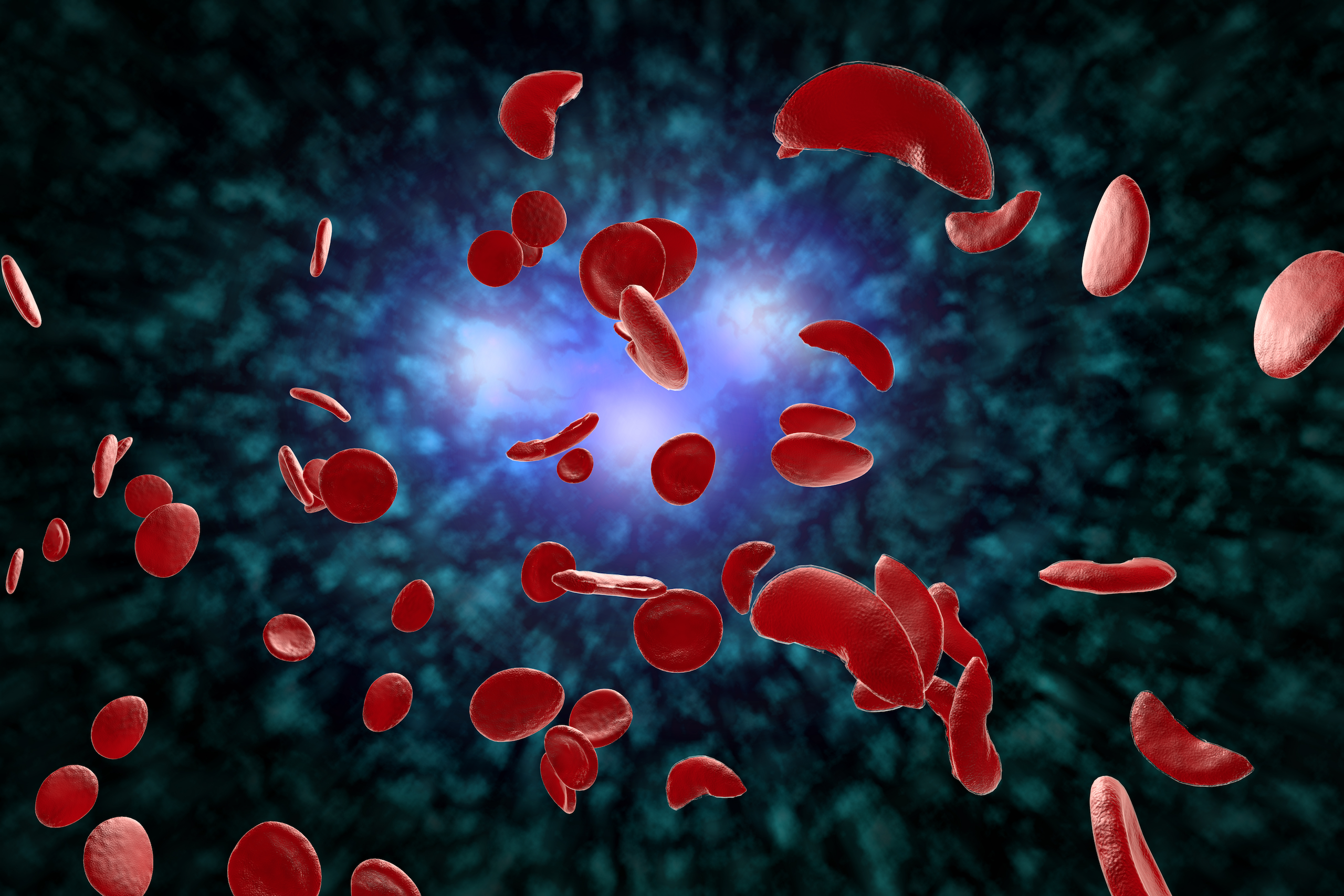
Sickle cell disease and beta-thalassemia are both caused by mutations in a gene that contains instructions for making hemoglobin, the protein in red blood cells that carries oxygen throughout the body. In sickle cell disease, the mutation causes red blood cells to stiffen and change shape, which can result in excruciating pain, anemia, blood clots, organ damage including strokes, and premature death. In beta-thalassemia, mutations reduce the production of healthy hemoglobin, potentially causing severe anemia, growth abnormalities, and other serious medical problems.
By the mid-20th century, researchers knew that our bodies make a different form of hemoglobin in the womb than as adults. They had noted that the fetal form of hemoglobin does not seem to be affected by the mutations causing sickle cell disease and theorized that it could be protective against the disease’s clinical manifestations.
Turning this knowledge into a cure would take decades of work from a cadre of investigators.
In 2007, Thein and her colleagues published the results of a genome-wide association study, showing that the BCL11A gene was linked to how much fetal hemoglobin the body makes in adulthood. A separate team including Orkin independently identified the same link, and then Orkin, Sankaran — an HMS MD-PhD student in Orkin’s lab at the time — and colleagues confirmed that the gene is the master regulator of fetal hemoglobin production and hemoglobin switching.
These studies showed that BCL11A had the potential to be a therapeutic target to treat sickle cell disease and beta-thalassemia. A few short years later, Orkin and his group published a study showing that suppressing BCL11A increased the production of fetal hemoglobin and cured the disease in mice with sickle cell mutations.
But BCL11A has more than one important role in the body — silencing the gene entirely would have other, deleterious effects. As a postdoctoral fellow in Orkin’s lab, Bauer, who is now also director of the Gene Therapy Program in Pediatric Hematology/Oncology at Boston Children’s, identified a region within BCL11A that, when removed, reduced the gene’s activity specifically in red blood cells. With a bit more refinement and the advent of the gene-editing tool CRISPR/Cas9, the researchers showed that a single edit to that region significantly enhanced the production of fetal hemoglobin.
These discoveries were then developed into a cure for sickle cell disease and beta-thalassemia that was approved in 2023 by the FDA for use in the United States. The treatment, CASGEVY, developed by CRISPR Therapeutics and Vertex Pharmaceuticals, is the world’s first approved CRISPR-based gene therapy.
A second gene therapy for these diseases, LYFGENIA, developed by bluebird bio with Tisdale as lead investigator, earned FDA approval at the same time. Whereas CASGEVY edits BCL11A to boost production of fetal hemoglobin, LYFGENIA uses an inactivated virus to deliver copies of a gene that produces a healthy form of adult hemoglobin.
Expanding access
Previous treatments for sickle cell disease involved daily medications that can have side effects and limited effectiveness. CASGEVY and LYFGENIA are one-time treatments, and CASGEVY has functionally cured more than 90 percent of the patients who have received it so far.
Before gene therapy became available, some patients with sickle cell disease could be cured with bone marrow or blood stem cell transplantation. For years, though, those procedures carried too much toxicity for many patients to undergo and required finding a well-matched donor, which is often difficult. Tisdale made numerous advances in transplantation techniques that allow blood stem cells to be collected from sickle cell patients’ own bodies and modified in a lab before being reinfused into the patient. He developed gentler methods for stem cell collection, reduced the intensity of procedures that transplant recipients must undergo between stem cell removal and replacement, and improved the viral-vector method used for LYFGENIA.
Both CASGEVY and LYFGENIA are delivered through donor-free stem cell transplantation using many of the protocols that Tisdale pioneered. Transplantation is not easy — it still requires an extended hospital stay while patients undergo chemotherapy. But Tisdale’s work has made these regimens safer and more manageable.
While the Warren Alpert Foundation is the first to jointly recognize the accomplishments of these five researchers, their efforts have been celebrated by a variety of other prestigious awards. Orkin and Thein received the 2026 Breakthrough Prize, for example, as well as the 2024 Shaw Prize. Tisdale and Orkin shared the 2024 Ernest Beutler Lecture and Prize from the American Society of Hematology. Orkin also previously received the Warren Alpert Foundation Prize in 1993 for his work on the genetic and molecular mechanisms of beta-thalassemia and other blood disorders.
The prize recipients all agree: The work is not yet done. There are obstacles to overcome to make treatment simpler and easier. The current treatments require access to high-end medical care, which is unaffordable or unavailable in many regions with the highest prevalence of these diseases. The awardees and others are working on advances that would replace stem cell transplantation, and its accompanying chemotherapy, with a pill or an injection that would allow gene therapies to be administered at lower cost and without the need for major health care infrastructure.
There are also many opportunities still to be realized based on this work. Additional therapies that target BCL11A are in development and being tested in clinical trials. Other genetic diseases may be treatable with similar methods.
The recipients’ past and ongoing research serves as a foundation for designing new therapeutics and cures that are accessible to everyone.
In their own words
“In the past decade, the medical industry has started to dedicate the resources that these disorders require, and there have been huge advances in technology, which is why we have started to see the emergence of more therapies,” Thein said. “I appreciate the opportunity to raise awareness not only of work from myself, my students, my trainees, and my collaborators, but of all the millions of people who are affected by sickle cell disease around the world.”
“Genome editing offers the promise of rationally designed one-time therapies that can address genetic diseases at their root cause and transform the lives of patients,” Bauer said. “These accomplishments are a testament to the power of combining curiosity-driven investigation with clinical perspective. I am thrilled to share this tremendous honor with mentors and colleagues.”
“This prize does more than celebrate past success. It provides the momentum to pursue our next great challenge: ensuring that these life-saving innovations are accessible to every patient, regardless of where they live,” Tisdale said. “The impact radiates outward, from the patient to their family, their caregivers, and the health care system, all no longer burdened by the complications of an untreated, progressive disease.”
“Recognition of this work by the Warren Alpert Foundation Prize is especially gratifying as it affirms my belief that investment in research and in the training of new investigators provides the best hope of creating innovative and transformative therapies for human diseases,” Orkin said. “We are committed to seeing our research benefit patients.”
“There is still so much more to learn from human genetic variation, including new insights into fetal hemoglobin regulation that we and others continue to pursue,” Sankaran said. “This award reflects the extraordinary power of science to build across generations and ultimately improve patients’ lives.”
About the prize
The Warren Alpert Foundation Prize recognizes the research of scientists throughout the world. Including the 2026 prize, the foundation has awarded over $9 million to 91 individuals. Since the inception of the award in 1987, 16 honorees have gone on to receive Nobel Prizes.
Recipients are selected by the foundation’s scientific advisory committee, comprising internationally renowned biomedical scientists and chaired by the dean of HMS.
The 2025 Warren Alpert Foundation Prize was awarded to Tomas Cihlar, John O. Link, and Wesley Sundquist for their discoveries culminating in the development of a medication, lenacapavir, to treat and prevent HIV. The medication was the first approved drug to disrupt a viral capsid, a critical piece that allows the virus to replicate.
2024 recipients were Renier Brentjens, Zelig Eshhar, Carl June, and Michel Sadelain for their transformational discoveries leading to the design of chimeric antigen receptor (CAR) T cells, a treatment that modifies patients’ immune cells and optimizes these cells’ ability to eliminate cancer cells.
In 2023, the prize was awarded to Drew Weissman, Katalin Karikó, Uğur Şahin, Özlem Türeci, and Eric Huang for pioneering discoveries into the biology of mRNA, for its modification for medicinal use, and for the design of mRNA-based COVID-19 vaccines that set the stage for other mRNA vaccines and a variety of mRNA-based therapies. Karikó and Weissman shared the 2023 Nobel Prize in Physiology or Medicine.
Read about other past recipients on the Warren Alpert Foundation Prize website.
For questions regarding the Warren Alpert Foundation Prize, please contact:
For questions about the Foundation not related to the prize, please contact: the Warren Alpert Foundation