mRNA Vaccine Design and Delivery to Immune Cells

Each year the recipient(s) of the Warren Alpert Foundation Prize are recognized at a scientific symposium hosted by Harvard Medical School.

2022 Warren Alpert Foundation Foundation Prize

In honor of: Eric Huang Katalin Karikó Uğur Şahin Özlem Türeci Drew Weissman for pioneering work leading to the discovery and development of mRNA vaccines.


Ugur Şahin
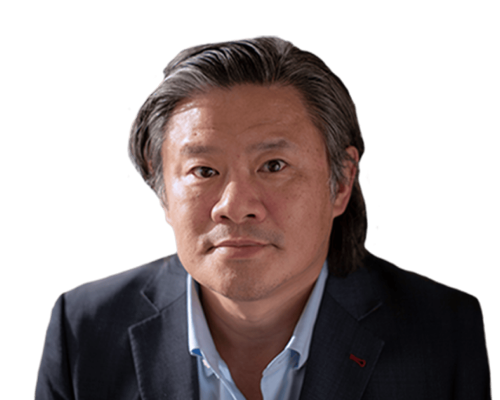
Ugur Şahin | 2022 Recipient

Prof. Ugur Şahin, M. D. is a physician-scientist, immunologist and one of the world’s foremost researchers on messenger ribonucleic acid (mRNA) medicines. His research focusses on the understanding of the molecular nature of human tumour antigens, novel concepts and technologies to exploit and redirect adaptive and innate immune effector functions for therapeutic purposes. He is Co-Founder and CEO of BioNTech and co-inventor of more than 900 granted patents. Şahin’s academic credentials include serving as a Full Professor (W3) in Translational Oncology & Immunology at Johannes Gutenberg University in Mainz and Helmholtz Professor for mRNA cancer immunotherapy in Mainz, where he was the supervisor for more than 50 PhD students. He also holds the role of Chairman of the Scientific Management Board of the Helmholtz Institute for Translational Oncology (HI-TRON) which is based in Mainz, Germany. Şahin has received numerous prestigious awards for his contributions to science.
Photo courtesy of BioNTech SE, 2022 (photographer: Stefan Albrecht)

Eric Huang

Eric Huang | 2022 Recipient

Eric Huang, Ph.D., is the General Manager and Chief Scientific Officer of Moderna Genomics, an independent research and business unit for genomic medicines founded by Moderna. In this role, Dr. Huang is responsible for setting the portfolio strategy, creating a product pipeline and a robust discovery engine, and building a new high-performing team. He was formerly the CSO of Moderna’s New Venture Labs, an internal incubator where a select group of scientists explores novel clinical applications of Moderna’s mRNA technology. Moderna’s infectious diseases vaccine platform that led to the COVID-19 vaccine was conceptualized under Dr. Huang’s leadership. Prior to joining Moderna in 2012, Dr. Huang held several positions within business and corporate development at biotechnology companies including Seaside Therapeutics, Stromedix, and Domantis.

Dr. Huang obtained his Ph.D. degree in Molecular and Medical Parasitology from New York School of Medicine and MBA degree from Boston University. He received his B.S. degree from Emory University.

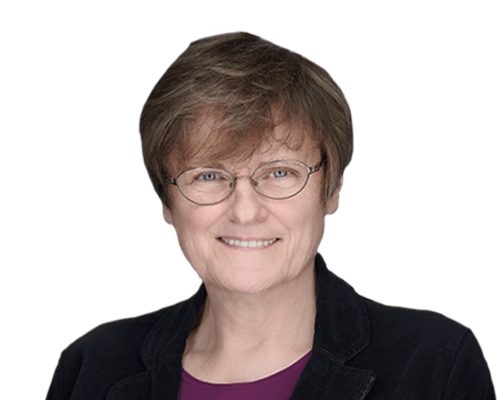
Katalin Karikó

Katalin Karikó | 2022 Recipient

Katalin Karikó, PhD, is Senior Vice President of BioNTech SE where she started to work in 2013. She is also professor at University of Szeged and Adjunct Professor at the Perelman School of Medicine, University of Pennsylvania, where she worked between 1989 and 2013. She received her Ph.D. in biochemistry from University of Szeged in 1982. For four decades, her research has been focusing on RNA-mediated mechanisms with the ultimate goal of developing in vitro-transcribed mRNA for protein therapy. She investigated RNA-mediated immune activation and co-discovered that nucleoside modifications suppress immunogenicity of RNA. This groundbreaking work unlocked the opportunity for the therapeutic use of mRNA. Her patents, co-invented with Drew Weissman on nucleoside-modified uridines in mRNA is used to create the FDA-approved COVID-19 mRNA vaccines by BioNTech/Pfizer and Moderna. For her achievement she received many prestigious awards, including the Japan Prize, the Breakthrough Prize and the Lasker Award.

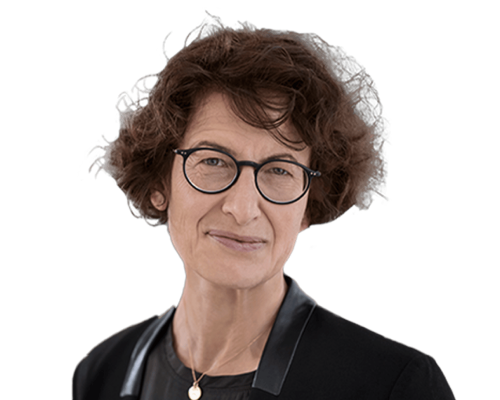
Özlem Türeci

Özlem Türeci | 2022 Recipient

Prof. Özlem Türeci, M.D., is a physician, immunologist, and cancer researcher with translational and clinical experience. Türeci´s research focus covers the discovery of cancer antigens as well as the research and development of mRNA-based vaccines and immunotherapies. She is co-inventor of more than 500 granted patents. Türeci is Co-Founder and Chief Medical Officer of BioNTech SE and has led the clinical development of BioNTech’s successful effort to develop a safe and effective mRNA-based vaccine against COVID-19, a historic achievement completed in less than one year. Türeci previously served as CEO and Chief Medical Officer of Ganymed Pharmaceuticals AG, which she co-founded with Prof. Ugur Şahin, M.D. and Prof. Christoph Huber, M.D. The company was acquired by Astellas in 2016. She is also a Professor for Personalized Immunotherapy at the University Medical Center Mainz and the Helmholtz Institute for Translational Oncology Mainz (HI-TRON) and currently serves as President of the Association for Cancer Immunotherapy (CIMT) in Germany. Türeci has received numerous prestigious international awards for her scientific achievements.
Photo courtesy of BioNTech SE, 2022 (photographer: Stefan Albrecht)

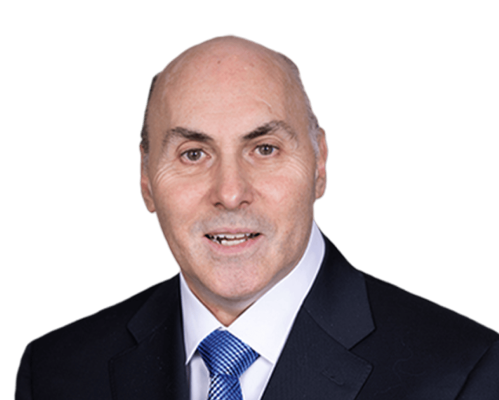
Drew Weissman

Drew Weissman | 2022 Recipient

Drew Weissman, M.D., Ph.D. is a professor of Medicine at the Perelman School of Medicine, University of Pennsylvania. He received his graduate degrees from Boston University School of Medicine. Dr. Weissman, in collaboration with Dr. Katalin Karikó, discovered the ability of modified nucleosides in RNA to suppress activation of innate immune sensors and increase the translation of mRNA containing certain modified nucleosides. The nucleoside-modified mRNA-lipid nanoparticle vaccine platform Dr. Weissman’s lab created is used in the first 2 approved COVID-19 vaccines by Pfizer/BioNTech and Moderna. They continue to develop other vaccines that induce potent antibody and T cell responses with mRNA–based vaccines. Dr. Weissman’s lab also develops methods to replace genetically deficient proteins, edit the genome, and specifically target cells and organs with mRNA-LNPs, including lung, heart, brain, CD4+ cells, all T cells, and bone marrow stem cells.

Symposium Program

Each year the recipient(s) of the Warren Alpert Foundation Prize are recognized at a scientific symposium hosted by Harvard Medical School.

Opening Remarks

George Q. Daley, MD,

Dean of the Faculty of Medicine, Harvard University; Caroline Shields Walker Professor of Medicine

Moderator

Shiv Pillai, MD, PhD

Professor of Medicine and Health Sciences and Technology; Ragon Institute of MGH, MIT and Harvard

Presentations

Katalin Karikó, PhD

Senior Vice President, BioNTech SE, and Adjunct Professor of Neurosurgery, Perelman; School of Medicine at the University of Pennsylvania

Developing mRNA for Therapy

Drew Weissman, MD, PhD

Roberts Family Professor in Vaccine Research, Perelman School of Medicine at the University of Pennsylvania

Nucleoside-Modified mRNA-LNP Therapeutics

Uğur Şahin, MD

Co-founder and Chief Executive Officer, BioNTech SE, and Helmholtz Professor for mRNA Cancer Immunotherapies, German Cancer Research Center in the Helmholtz Institute Mainz; and Professor, University Medical Center of the Johannes Gutenberg University Mainz

mRNA Cancer Vaccines and Immunotherapies

Özlem Türeci, MD

Co-founder and Chief Medical Officer, BioNTech SE, and Helmholtz Professor for Personalized Cancer Immunotherapies, German Cancer Research Center in the Helmholtz Institute Mainz

Project Lightspeed: Developing a COVID-19 mRNA Vaccine

Eric Huang, PhD

General Manager and Chief Scientific Officer, Moderna Genomics

Moderna’s mRNA Platform and Vaccines: Our Reflection and Journey to Today

Sign up to receive updates

Sign up to receive updates

Past Symposia

For questions about the prize, please contact us.
Contact Us
I would like to express my sincere appreciation to the Warren Alpert Foundation and Harvard Medical School for awarding me such a great honor. For me, this award is not only an honor but a responsibility.
- Tu Youyou

Tu Youyou | 2015 Recipient

For their pioneering discoveries in chemistry and parasitology, and personal commitments to translate these into effective chemotherapeutic and vaccine-based approaches to control malaria - their collective work will impact millions of lives globally particularly in the developing countries.

Tu Youyou is currently a Professor and Director of Qinghaosu Research Center at Institute of Chinese Materia Medica, China Academy of Chinese Medical Sciences.

Tu joined the Institute of Chinese Materia Medica (ICMM), China Academy of Traditional Chinese Medicine (CATCM) (renamed China Academy of Chinese Medical Sciences, CACMS in 2005) in 1955 after graduation from School of Pharmacy, Beijing Medical College (1951 – 1955).  She late attended a two and half year course on the traditional Chinese medicine (TCM) (1959-1962) - an in depth training specifically designed and offered to the graduates with Western medical background.  Over more than forty years, Tu has been working in the institute as a research assistant, assistant professor, associate professor, professor and director of the Chemistry Department.  She also holds a chief professor position of CACMS as well as members of Phytochemistry Society of China Pharmaceutical Association; Chinese Society of Traditional and Natural Drugs; Council member and Founding Member of Chinese Association of Invention; Executive Committee of All-China Women's Federation (1988-93) and a committee member of Beijing Committee of Natural Science Foundation (1995-97).

Tu’s research on anti-malaria drugs started in 1969 when she was appointed to head the Project 523 research group at the institute.  Project 523 was a secret military program initiated by the Chinese leadership in 1967 in supporting Vietnam government for searching medicines to treat anti chloroquine-resistant malaria.  Tremendous efforts had been made both in US and China but no effective drugs were found by the time Tu accepted the task.

Tu started with collection of over 2000 candidate recipes from which she and her team later screened over hundreds of herbal extracts.  Only one of the extracts from Qinghao (Artemisia annua L.) showed some promising effect, which however was not consistent and reproducible.  Tu further reviewed all available tradition Chinese medicine literatures and noticed a paragraph “Take a handful of Qinghao, soak in two liters of water, strain the liquid, and drink” in the Handbook of Prescriptions for Emergencies (340 CE) authored by Ge Hong.  She realized that the heating applied during extraction might have damaged the active components in the herb.  With this in mind, Tu re-designed low temperature extraction approaches using the solvents with low boiling points.  On the 4th October 1971, a neutral ether extract numbered 191 was found 100% effective in clearing Plasmodia in the mice and monkey test models.  To prove safety of the Qinghao extract and expedite the project, Tu and other two colleagues volunteered in the toxicity study on themselves in July 1972.  Between August and October 1972, Tu and her team carried out the first clinical trial in southern China in which all thirty-one patients treated with the Qinghao extract recovered from the disease.  Subsequent to the first clinical trial, Tu and her colleagues further purified the extract and obtained a pure active crystalline in November 1972.  The compound was late named Qinghaosu (Artemisinin).

Over last several decades, Tu has continued her effort in fighting against malaria.  She and her colleagues developed artemisinin into a medicine and late the team further developed dihydro-artemisinin, another anti-malaria drug, which is ten fold more effective than artemisinin itself.

Tu’s achievement in the discovery of artemisinin and its application in the malaria treatment as well as her unanimous contribution to the healthcare of human being have been well recognized nationally and internationally.  She was honored the Lasker ~ Debakey Clinical Medical Research Award in 2011.  Tu also received numerous awards nationally which include “Award for Progress in Anti-malarial Research Achieved by Project 523 Scientific Team” honored by China National Congress of Science and Technology (1978); “National Scientific Discovery Award” for Anti-malaria Drug-Qinghaosu by the China Ministry of Science and Technology (1979); “Invention Award” (as the first inventor) by China National Congress for Awards in Science and Technology (1982); “Award of Young and Middle-aged Experts with Outstanding Contribution” by the Chinese Government (1984); “The Top Honorary Award” by China Academy of Traditional Chinese Medicine (1992); “The Top Ten National Achievements for Progress in Science and Technology” by China National Committee of Science and Technology (1992); “First-Class Award of National Achievements in Science and Technology” by China National Award Committee for Advances in Science and Technology (1992); “National Model” by China State Council (1995); “Award for Outstanding Achievement in Traditional Chinese Medicine” by Guangzhou Zhongjing Award Foundation for Traditional Chinese Medicine (1995); “Outstanding Scientific Achievement Award” by Qiu Shi Science and Technologies Foundation of Hong Kong (1996); “Top Ten Health Achievements in New China” by China Ministry of Health (1997); “Female Inventor of the New Century” by China National Bureau of Intellectual Property (2002); “Golden Medal of the 14th National Invention Exhibition” by China National Bureau of Intellectual Property (2003); “Award for Development of Chinese Materia Medica” by Cyrus Chung Ying Tang Foundation, (2009).  She also received “Prince Mahidol Award” by Thailand Prince Mahidol Award Foundation (2003),  “GlaxoSmithKline Award for Outstanding Achievements in Life Science” (2011), Lasker~DeBakey Clinical Medical Research Award(2011), and the Nobel Prize in Physiology or Medicine(2015).

View Past Recipients